Quick answer
ZIP screen systems will be one of the most requested outdoor shading solutions for café terraces, restaurants, hotels and modern villas in 2026. They provide shade, privacy, stability and a cleaner architectural look than improvised fabric solutions. Local searches often use zip sistem zavesi, zip zavesi za terasa and zip sistemi za kafici.
Why this matters
Outdoor areas are no longer just an extra. A terrace that can be used for more months brings more seating, better comfort and more flexibility. For homes, a ZIP system makes the terrace more comfortable during strong summer sun.
Unlike loose fabric, a ZIP system uses side guides that hold the fabric more securely. This creates a clean façade look and better control of light and privacy.
Trend 1: The terrace as an extended living room
Homes and villas
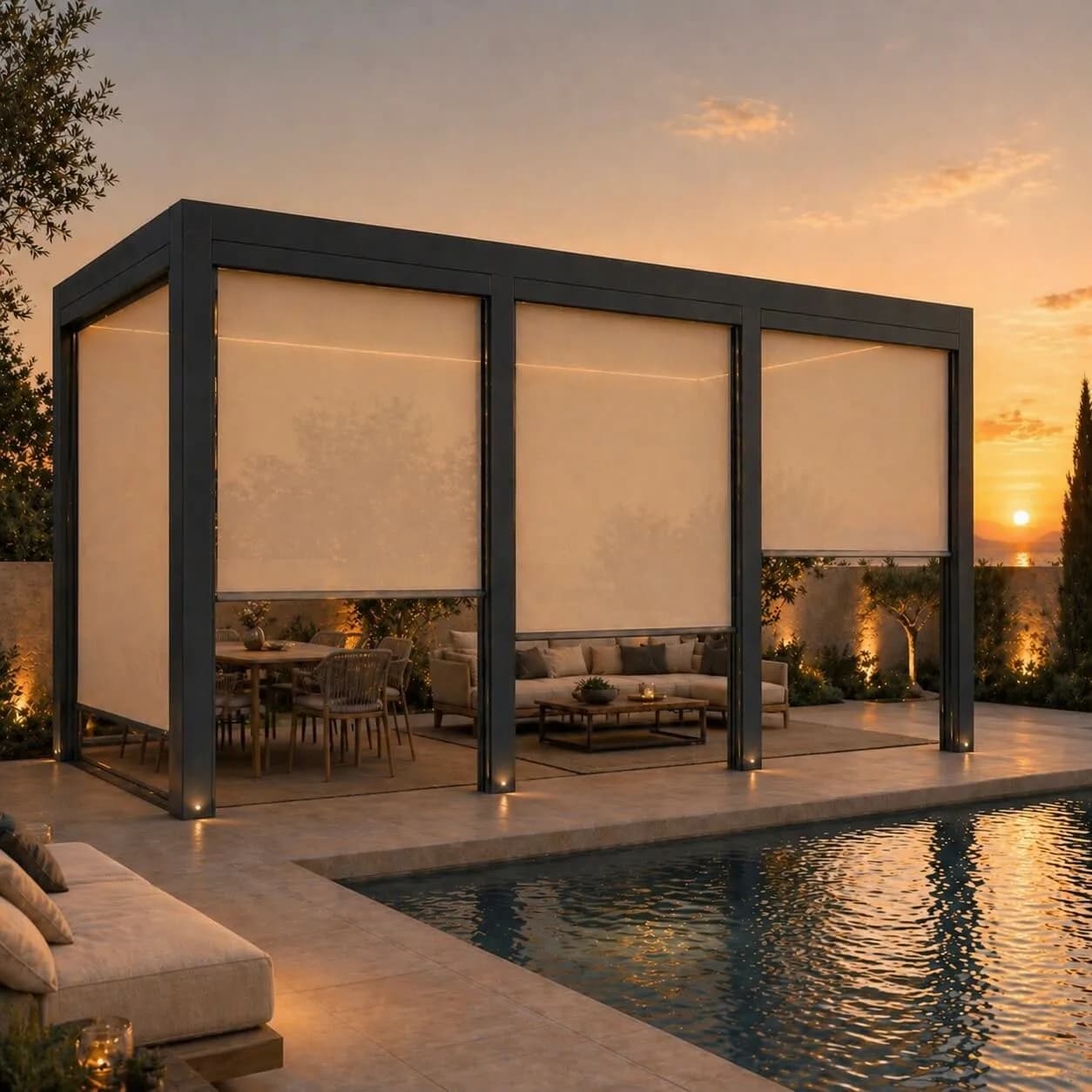
In modern homes and villas, terraces are increasingly designed as extensions of the living room. ZIP screens reduce direct sun while preserving the outdoor feeling. With minimal furniture and neutral colors, the result feels premium and calm.
Hotels and apartments
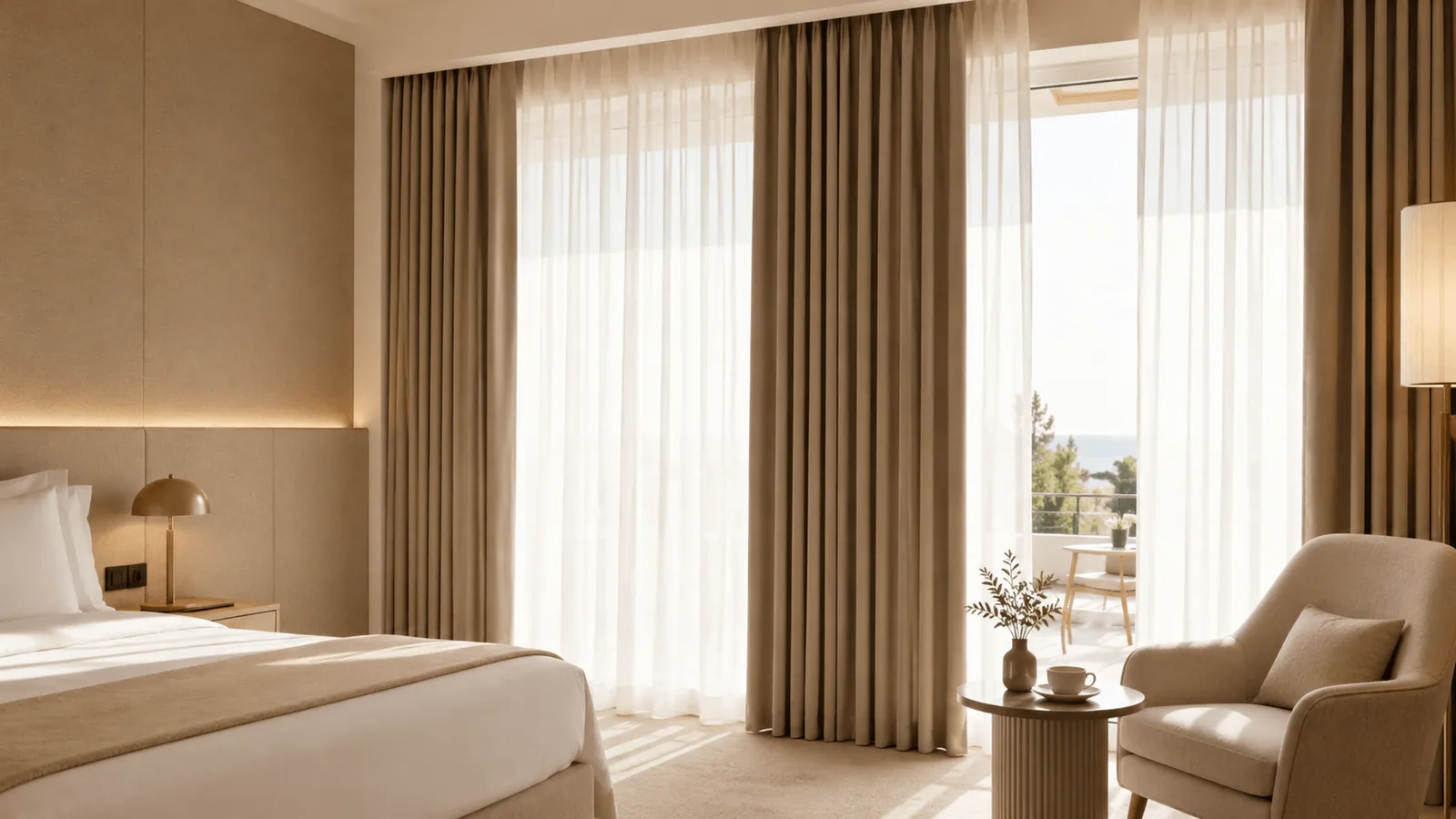
For apartments and boutique hotels, ZIP systems provide a unified façade and better guest privacy.
Trend 2: Café and restaurant terraces with better seasonal control
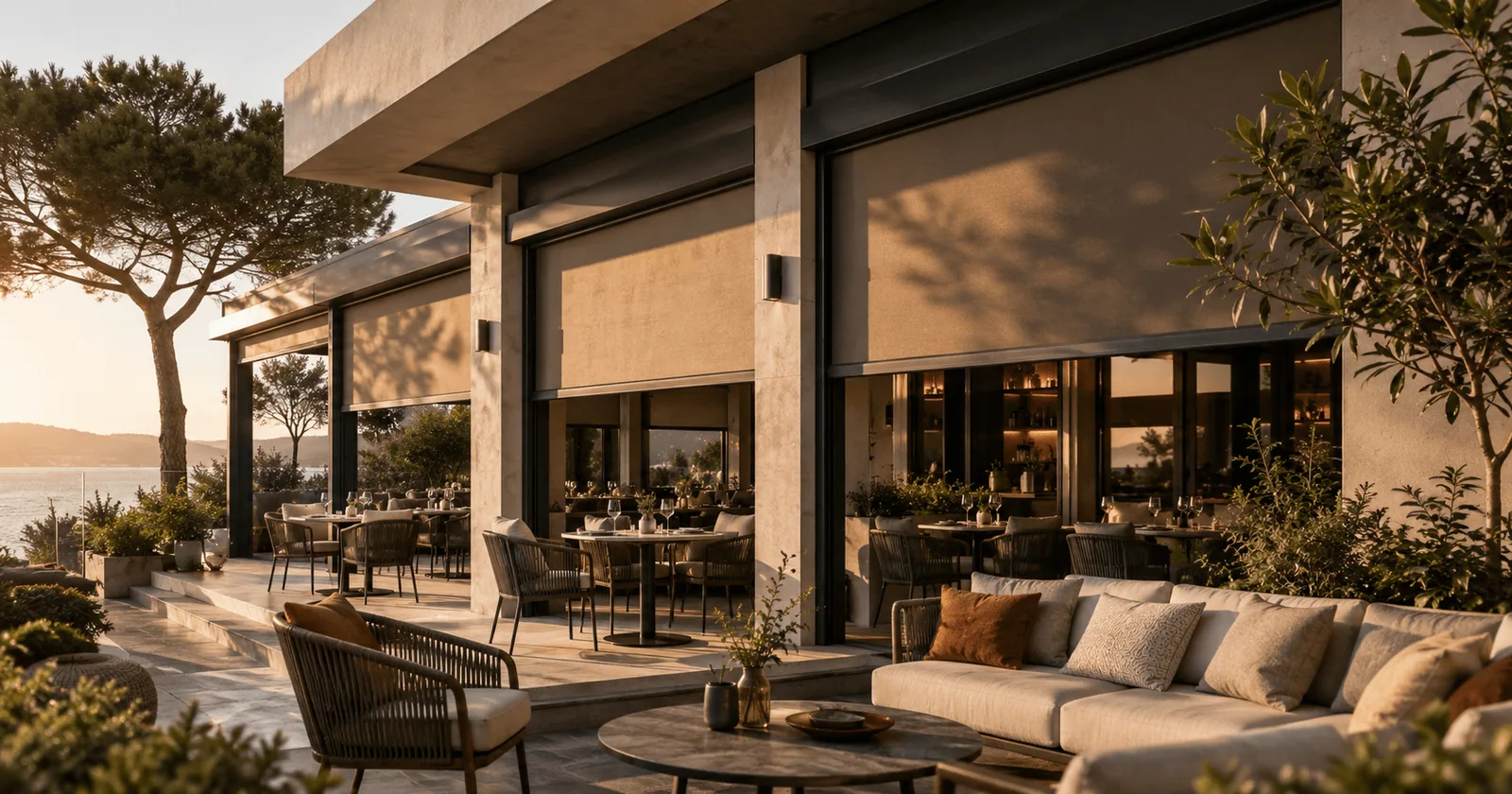
Cafés and restaurants want terraces that work for more months. ZIP systems help with sun, wind and street visibility. With good planning, a terrace feels more organized, comfortable and premium.
For hospitality properties, the system should be durable, easy to operate and not require daily improvisation.
Trend 3: Neutral colors and architectural style
In 2026, neutral architectural tones will remain the safest choice: white, cream, sand, grey, anthracite and warm brown-grey. They fit façades, aluminum joinery and modern interiors.
Strong colors can support a brand, but neutrals usually age better.
Trend 4: Motorization and easier operation
For large terraces, hotels and restaurants, motorization is not only a luxury. It saves time and allows staff to raise or lower multiple systems quickly. Group control creates a professional impression.
Comparison
Common mistakes
- Choosing without checking wind and exposure.
- Oversizing without the right mechanism.
- Color that clashes with the façade.
- Manual operation where motorization would be practical.
- Fitting without planning supports and walls.
- Buying only by price, without stability checks.
Tip from Grombi: A ZIP system should be planned with the space, not just the dimensions. Sun position, wind, façade and daily use matter as much as width and height.
Planning ZIP screens by exposure
South and west-facing sides
These sides receive the strongest sun and often need more serious shading. Fabric density, color and material choice strongly affect comfort.
North and east-facing sides
The need may be more about privacy than strong sun protection. In these cases, a lighter visual effect can work well.
Wind-exposed positions
If the terrace is exposed to wind, dimensions, guides, brackets and fixing points matter. ZIP systems are stable, but each project should be assessed realistically.
Maintenance and long-term use
For hospitality properties, the system should be cleaned seasonally and the guides checked. Dust, leaves and dirt can make movement harder if left too long. Regular checks extend the system’s life.
Conclusion with call to action
ZIP systems are one of the most practical and modern outdoor shading solutions for 2026. If you are planning a terrace, café garden, hotel or villa, request measurement and a project recommendation from Grombi.